

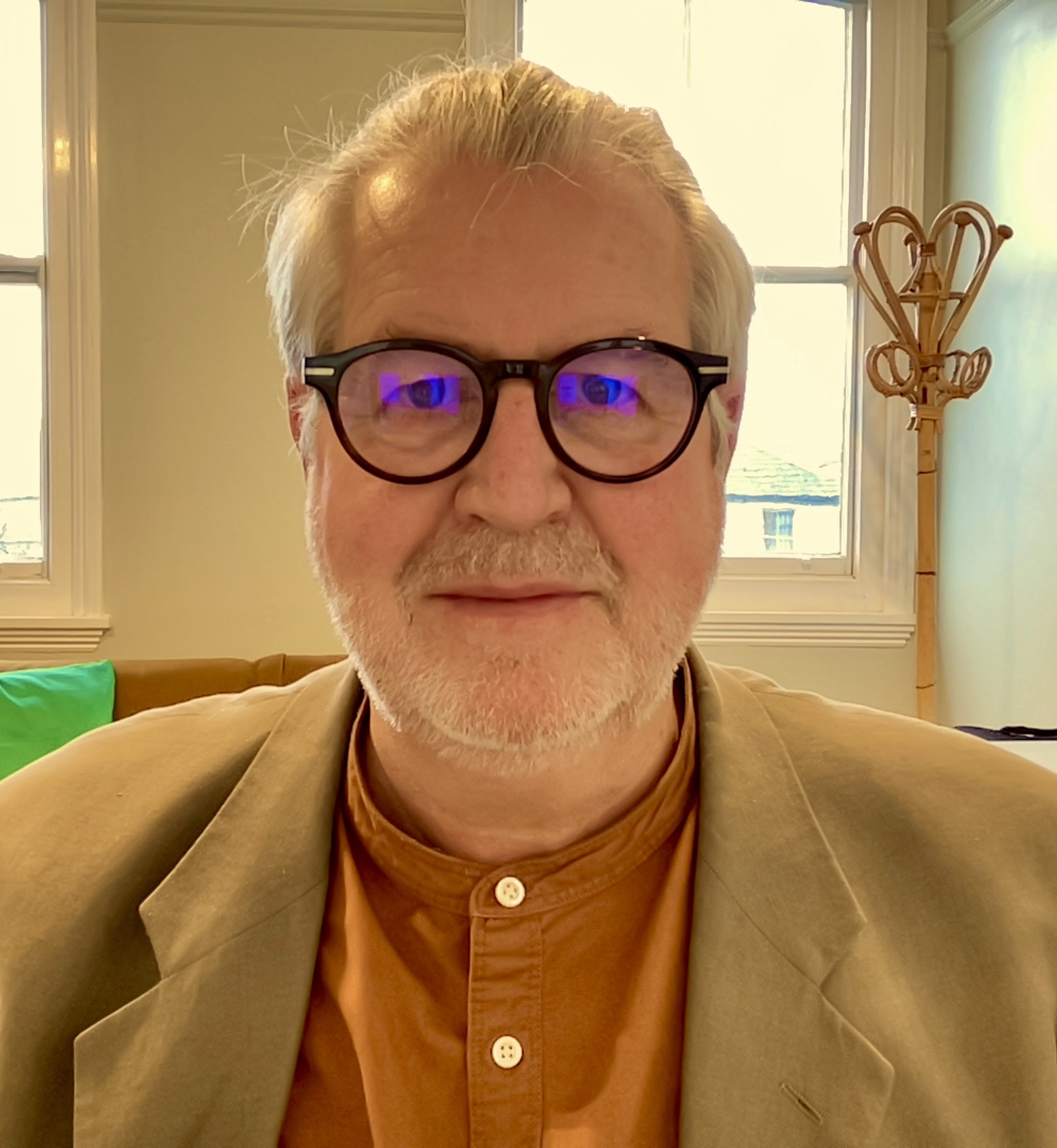
Rory Singer
Founder & Clinical Director, New Road Psychotherapy
I have spent over thirty-five years sitting with people in difficulty. What I have learned, gradually and often reluctantly, is that healing does not require perfection. It only demands the courage to see clearly and a relationship in which that honesty feels safe.
I founded New Road Psychotherapy over twenty years ago because I wanted to establish a centre where high-quality work could truly be realised. Therapy has its limits: the clock, the fee, the framework.
What shapes those limits makes all the difference. At New Road, we have strived to foster an environment of authentic kindness, warmth, and inclusion, one that we hope clients feel from the moment they arrive and that therapists bring into the room.
How I came to this work
In my early twenties, I spent five years as a monk in the Thai Forest tradition of Buddhism. It was a rigorous and demanding training, not mystical, but intensely practical. It asked me to examine closely desire, fear, identity, and the stories we tell ourselves to avoid discomfort. That formation has never left me. It runs through everything I do.
After leaving the monastery, I trained as a psychotherapist and built a clinical career across various challenging and formative environments. For ten years, I worked as a psychotherapist in the IVF and reproductive medicine unit at Hammersmith Hospital, London, a role that brought me close to the intersection of hope, loss, and the body in ways that shaped my understanding of human resilience.
Additionally, I spent a decade as Course Leader and Lecturer for the Diploma in Therapeutic Counselling at Crawley College, contributing to the training of a new generation of therapists.
At King’s College Hospital for three years, I specialised in working with male survivors and perpetrators of child sexual abuse, collaborating as part of a multi-agency team with police, probation officers, social workers, and families. That work required careful attention to how harm is transmitted, how shame functions, and what genuine accountability entails.
I have been teaching mindfulness-based programmes since 2005 and am a qualified Yoga Nidra teacher. I am also a qualified Humanist funeral celebrant through Humanists UK. That work continually reminds me that grief and loss are not interruptions to life but are woven into it, and that sitting with what cannot be fixed is perhaps the most human act any of us is asked to do.
How I understand the work
People attend therapy carrying patterns that once made perfect sense. Anxiety that kept them safe. Withdrawal that protected them from further hurt. Vigilance that was entirely rational, considering what they had experienced. These are not faults. They are wise adaptations that have simply outlived their original purpose.
My work draws on drive theory, attachment theory, trauma theory, and contemporary neuroscience, particularly the understanding that the mind is constantly predicting and working from its accumulated history of expectations about the world and other people. When those expectations are shaped by pain, they tend to reproduce it. Therapy, in this sense, is a gradual and relational process of revision.
I am also influenced by Buddhist philosophy not as a religious obligation, but as a thorough tradition of inquiry into the nature of mind and suffering. What strikes me, after many years with both, is how much psychotherapy and contemplative practice describe the same territory from different perspectives.
What I believe about this work
Psychotherapy is sometimes described as merely a technical service or a set of skills applied to a presenting problem. I believe that omits something essential.
The qualities that make therapy truly effective, honesty, patience, and the willingness to stay present with what is difficult, are also the qualities that sustain communities and relationships. In that sense, I see this work as part of a broader ethical fabric, not merely a private exchange between two people in a room.
At New Road, we aim to uphold that understanding. The work here is serious, careful, and we hope genuinely humane.
I am less interested in personal growth than in what growth ultimately demands of us: humility and generosity. Humility to accept the world as it is. Generosity to let go of what we value when it is time to release it. These are not soft virtues. They are the hardest work I know, and they form the core of everything we do here.
UKCP registered Individual & Group Psychotherapist
Supervisor
Trainer
Consultant
Fees per 50 minutes:
Individual therapy (50 minutes): £100
Couples therapy: £150
Specialist implications or fertility counselling: £150