

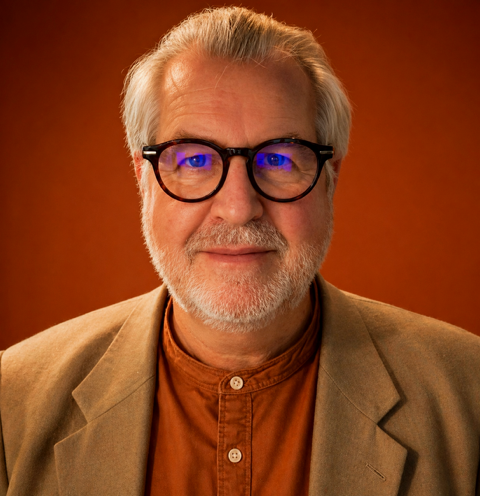
Rory Singer
Founder & Clinical Director, New Road Psychotherapy
Rory Singer
Founder & Clinical Director
In my view, people who seek therapy carry the seeds of wisdom, humility, and courage.
It is wisdom to recognise that the world and others are not the only sources of pain, and that something in our relationship with ourselves and with others needs to be examined. It is humility to ask for help and to reveal our vulnerability to another person. It is the courage to meet ourselves as fully as we can.
I understand this not only from thirty-five years of sitting with people in exactly that moment, but also from having lived through versions of it myself. My own suffering, mistakes, falling apart, and humiliations have been as much a part of this education as anything I have studied or been taught. Whatever insight I have has been earned slowly and is still being earned. I am further along than I was. I am not at the end.
This practice is not only grounded in the theory I have engaged with. It is grounded in what those years have taught me in the therapy room, on the meditation cushion, in relationships, and in life about how we work, how patterns form, and what it truly takes to change.
EARLY FORMATION
In my early twenties, I spent five years as a monk in the Thai Forest tradition of Buddhism. It was not a retreat from the world but an immersion in something more demanding: close, sustained attention to the workings of the mind. To desire and fear. To the stories we construct around our experience, and to how those stories both protect us and keep us stuck.
What the monastery gave me was a first language, not a framework I later adopted, but the ground I stood on when I began to learn everything else. The Thai Forest tradition is uncompromising about one thing: the suffering we carry is neither random nor permanent. It arises from a mechanism that, with sustained attention and genuine practice, can be understood and met differently. That conviction has shaped everything that followed.
That training left its mark. This is why the work at NRP tends to be unhurried: I have learned that hurry is usually a form of avoidance.
THE CLINICAL YEARS
After leaving the monastery, I trained as a psychotherapist and spent a decade in the IVF and Reproductive Medicine Unit at Hammersmith Hospital. Sitting with people at the edge of hope, and sometimes beyond it, taught me something no training manual can convey: the capacity to remain present with what cannot be fixed is not a clinical skill. It is a human one. It is what NRP is built on.
Three years at King's College Hospital, working with male survivors and perpetrators of child sexual abuse, made something else clear.
That work brought me into close collaboration with police, psychiatrists, social workers, probation officers, and the NSPCC. The system's need to prevent harm and the person's need to be genuinely met are equally important. Learning to hold both at the same time shaped my understanding of what good clinical work actually requires.
Shame, when it goes unwitnessed, reproduces harm. Genuine change depends not on technique but on the quality of the relationship in which difficult things are held without reflex condemnation or flinching.
A decade as Course Leader for the Diploma in Therapeutic Counselling at Crawley College gave me the chance to pass this on.
The values at NRP are not mine alone. They have been built, tested, and carried forward by the therapists we have at New Road and by the work we have done together. That matters to me. What I have learned is only useful if it travels further than I can go on my own.
None of this has been formed in isolation. Over forty-five years, I have been shaped by teachers, mentors, supervisors, and fellow practitioners whose generosity, rigour, and example have been indispensable.
The development of wisdom and understanding is never ours alone. It is built on the work of those who walked before us, who gave their time and insight freely, and whose influence runs through everything we do at NRP, often in ways I cannot fully trace. I hold that inheritance with gratitude.
HOW WE UNDERSTAND THE WORK
People come to therapy carrying patterns that once made perfect sense. The anxiety that kept them safe. The withdrawal that shielded them from further hurt. The vigilance was entirely rational given what they had endured. These are not faults. They are wise adaptations that have simply outlived their purpose.
Knowing this changes how we work. We are not here to correct you. We are here to help you understand yourself honestly and, from that understanding, choose differently. That is a slower road than most people expect, and it is also more lasting.
WHAT WE STAND FOR
I founded New Road Psychotherapy over twenty years ago because I wanted to create a place where genuinely good work could be done, where the environment itself reflected the aims of therapy, and where the welcome at the door and the care in the room were one and the same.
NRP is not a crisis service. It is a place for people who take their inner life seriously. The qualities that make this work effective, namely honesty, patience, and the willingness to stay present with difficulty, are not techniques. They are values. They are what we ask of ourselves and what we try to make possible for the people who come to us.
I am less interested in personal growth as an end in itself than in what growth ultimately demands: humility and generosity. Humility to see the world as it is and to let go of seeking to control it. Generosity to let go of what we have outgrown. These are not soft virtues. This is the most challenging work I know.
UKCP registered Individual & Group Psychotherapist
Supervisor
Trainer
Consultant
Fees per 50 minutes:
Individual therapy (50 minutes): £100
Couples therapy: £150
Specialist implications or fertility counselling: £150